My Family
Where I learned to see the individual within the whole.
Yale to Jail
Ten children. One family. No single version of the story. This is mine.
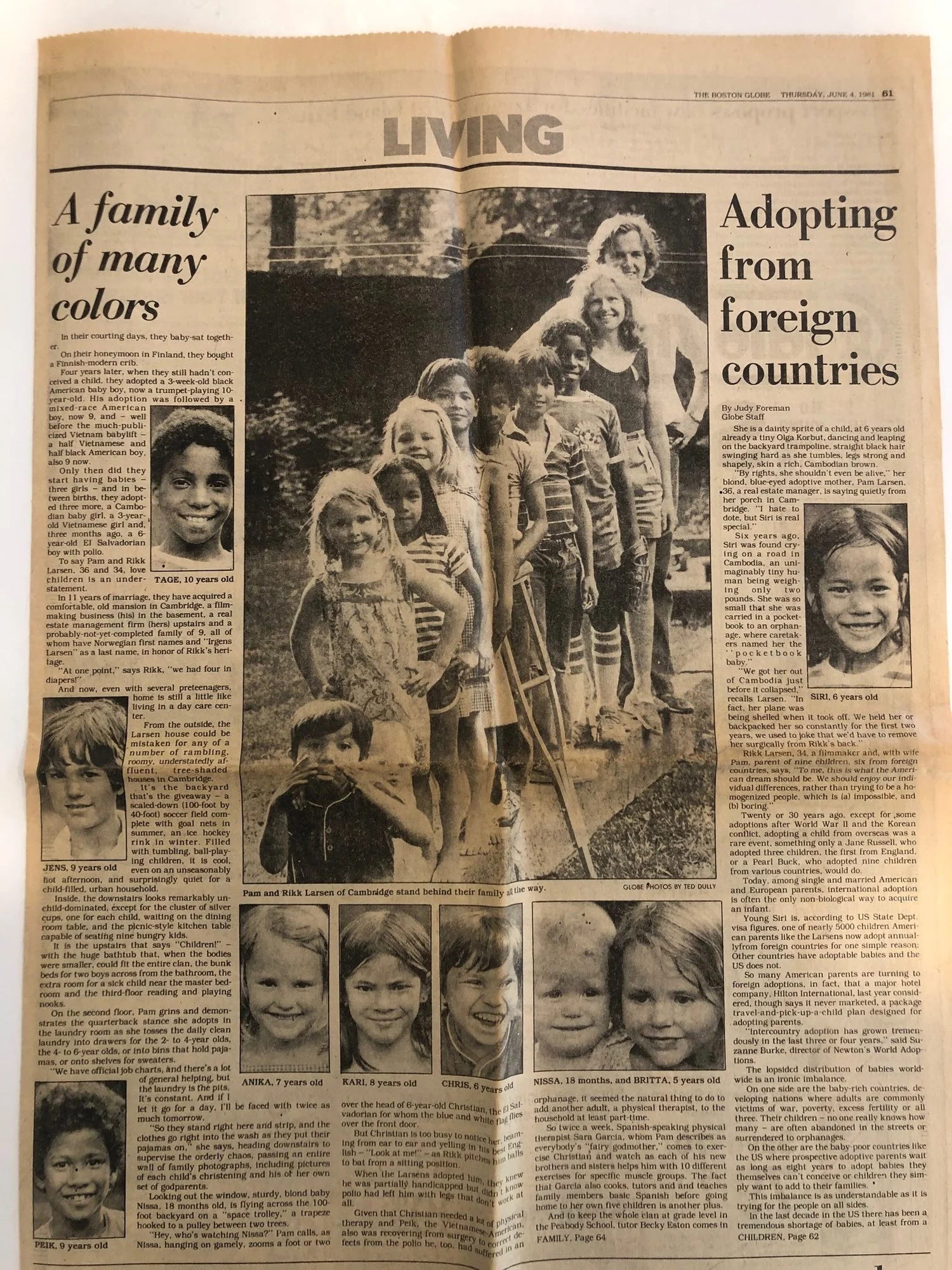
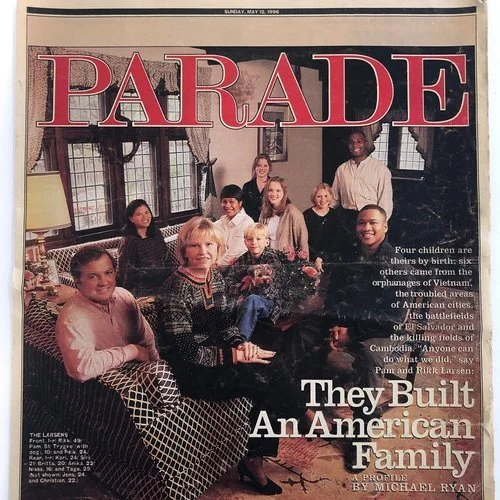
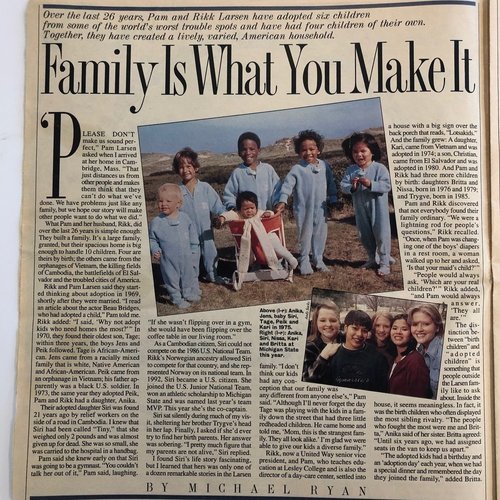
I’m the seventh of ten children: six arriving by adoption and four by birth. Our lives have taken us in different directions, hence the title, but no two-word summary could explain who any of us are or how we got here.
Growing up in a multicultural family with nine brothers and sisters shaped my values, my relationships, and my understanding of people. I had less personal space, fewer belongings exclusively mine, and less individual attention than I desired. I also learned early about group dynamics, belonging, and finding an identity within a diverse whole.
The size of our family required certain practices. Assigned seats at the dinner table and in the 15-passenger van. Mountains of hand-me-downs with labels that read “Itsa Larsen’s.” An infamous job chart, with allowances paid only after morning, evening, and Sunday chores were inspected.
There was a line for the bathroom, breakfast, and Atari. It took me years to discover that some of the rules I knew for Monopoly, Uno, and backgammon were “Larsen Rules.” Other families apparently played differently.
Choas & Connection
Being part of my family was incredible.
Being recognized as yourself was impossible.
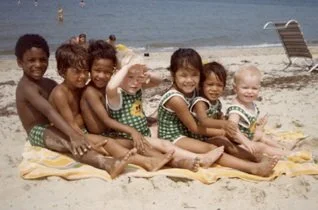
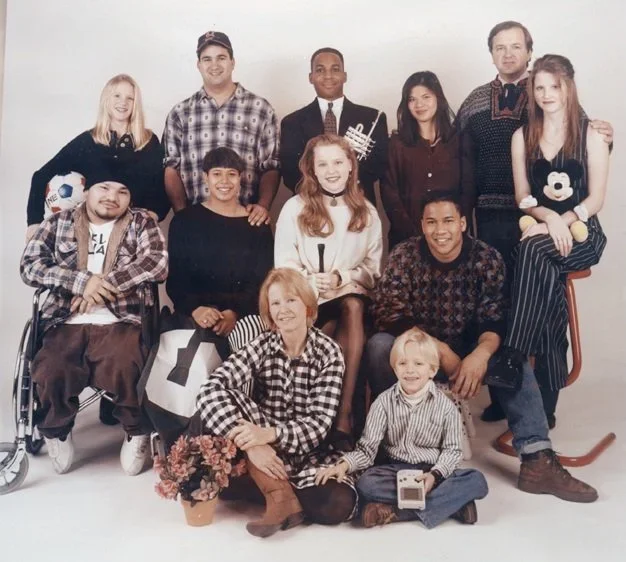
We were quite cute as kids. Eight of us were within five years of one another, often dressed in matching clothes, including matching bathing suits so our parents could keep track of us at the beach. Our Norwegian names connected us to my dad’s heritage. At our annual holiday party, we performed like the multicultural von Trapps. Family friends would start contacting my parents in early fall to make sure they saved the December date.
People confused our names, faces, and talents. “Are you the one who sings?” No. Different Larsen.
By adolescence, the matching outfits had given way to eight teenagers under one roof. Condoms appeared in Christmas stockings, curfews were missed, and siblings introduced one another to smoking pot. The household grew more complicated, and some relationships became full of fear. I was scared of some of my brothers and competitive with most of my sisters.
Some of us formed alliances. Others distanced themselves. Some lashed out. We adapted in different ways, and those ways of coping became part of what we carried into adulthood.
Meanwhile, everyday life continued. There were separate bathrooms for boys and girls, heaps of laundry, and clothes you never quite found again. The phone was always busy, no one really had call waiting in the 80’s, and the 15-minute limit on calls was widely understood and rarely observed.
The once powerful job chart hung neglected in the kitchen. School, sports, hobbies, friends, boyfriends, girlfriends, and “real” jobs had taken over. We were all encouraged to get working papers at 14.
By the time I entered high school in 89’', keeping track of everyone had become enough of a project that my mom began producing a twice-monthly family newsletter. She left it on the dining room table: multiple pages, double-sided, with photographs. Before social media, there were my mother’s newsletters.
Family friends requested copies, so she started mailing them out. The newsletter did not go through an approval process. I regularly learned something new, and occasionally embarrassing, about my siblings.
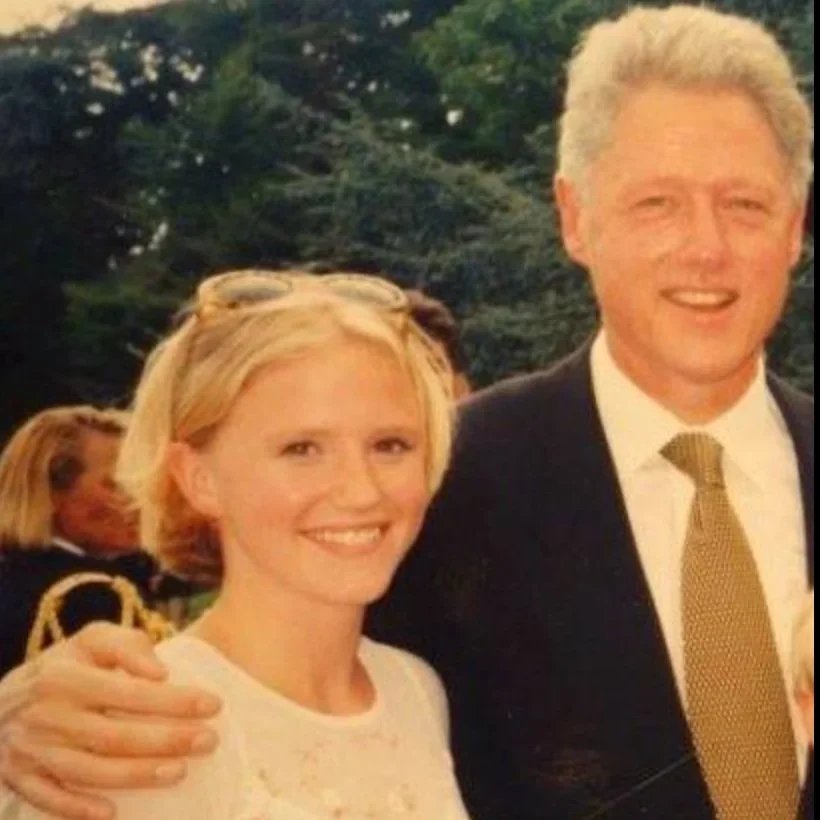
Then there was the photograph of my family with Bill Clinton. “When did that happen?” My parents had forgotten to invite me.
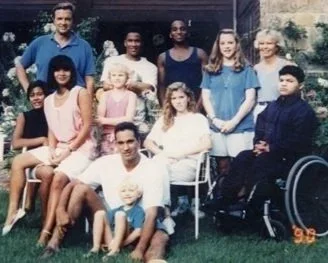
Let me take you back to the year 1990.
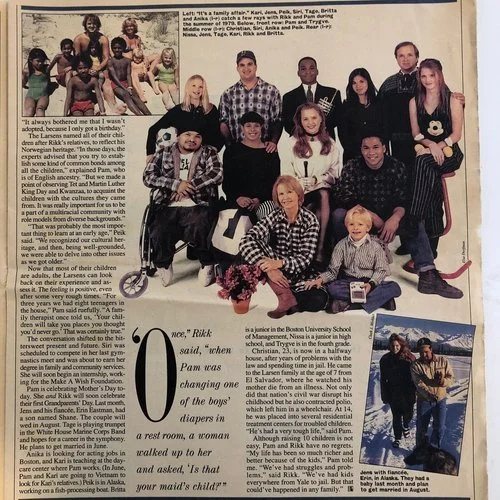
Here’s what everyone was up to. We’re listed in order of arrival instead of age, because it just made the most sense to tack on a name to the end of the list when someone new showed up.
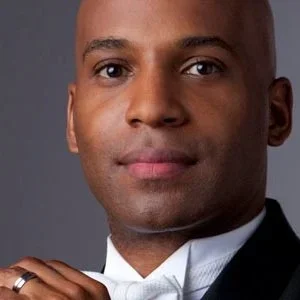
Tage - 18, African-American, adopted from Connecticut
Sophomore at Michigan State on a full music scholarship. Tage was the oldest only by a year but he seemed far older. It was a huge responsibility to be the first. A role model he did not want to be. He pushed boundaries farther then he should have, but I was so far removed from his life that I don’t remember much of the drama he caused. By the time I may have started my own teenage boundary-pushing, my 7 older siblings had already done it all and had been punished in every sort of way. My parents were geniuses, as they didn’t ground us -- depending on our offense, we’d have to do something that improved their lives and was often embarrassing, like weeding the sidewalk in front of our house or scrubbing all of the pots and pans until they shined. I do remember the beautiful sound of Tage playing trumpet floating down from his room on the third floor. It was a melodious backdrop for the chaos of the house (aka sonos for the 80’s) and I remember how quiet it felt when he went to college.
Tage would later become the first African-American trumpet player in the Chicago Symphony (CSO). He has two sons. (Let’s start the Larsen grandchild count = 2).
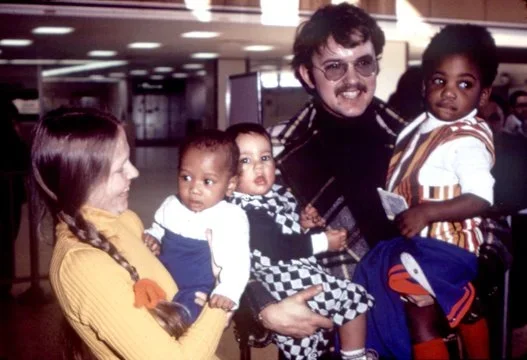
Jens - 17, Native American, adopted from Connecticut
Senior in high school. Hockey fan. Aggressive and hard to get along with or relate to. Many negative incidents stand out in my memory: him spitting on me and my sister and calling us “cunts,” and never acknowledging me in the halls of school even when people asked me, “Isn’t that your brother?”
The last time I saw Jens was in 1997, when he flew into a rage and came after me with a bat. My mother had to call the police. He lived in Alaska for a long time before moving to Minnesota. A big Boston sports fan even from a distance, he bonds with my siblings and parents over Red Sox and Patriots wins. He has two sons. (Larsen grandchildren = 4).
Jens died in February 2022 after deciding to not battle his ailing health.
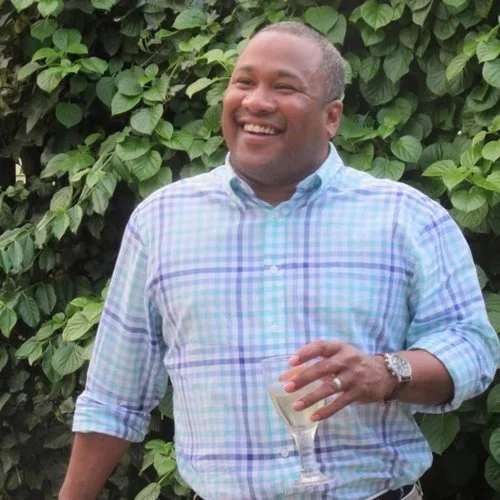
Peik - 17, Half Black/Half Vietnamese, adopted from Vietnam
Senior in high school. Smart, social, fun, full of life and more energy than could be contained in a classroom. Spontaneous, creative, and utterly unique. He was the soul of our family. Mischievous but loving, master of pranks but fiercely protective. As we grew up, our family reunions would be scheduled around him because life was just more fun with Peik.
Peik would complete college while working full-time when he was in his late thirties because he wanted his sons to have a father with a college degree. In 2014 he got a gig teaching 6th grade at the grammar school we all went to but the summer before he was supposed to start, Peik died suddenly of septic shock and left us all devastated. We are lucky he had married an incredible woman and had 3 sons who are as rambunctious as he was and remind us of him in the best of ways. (Larsen grandchildren = 7)
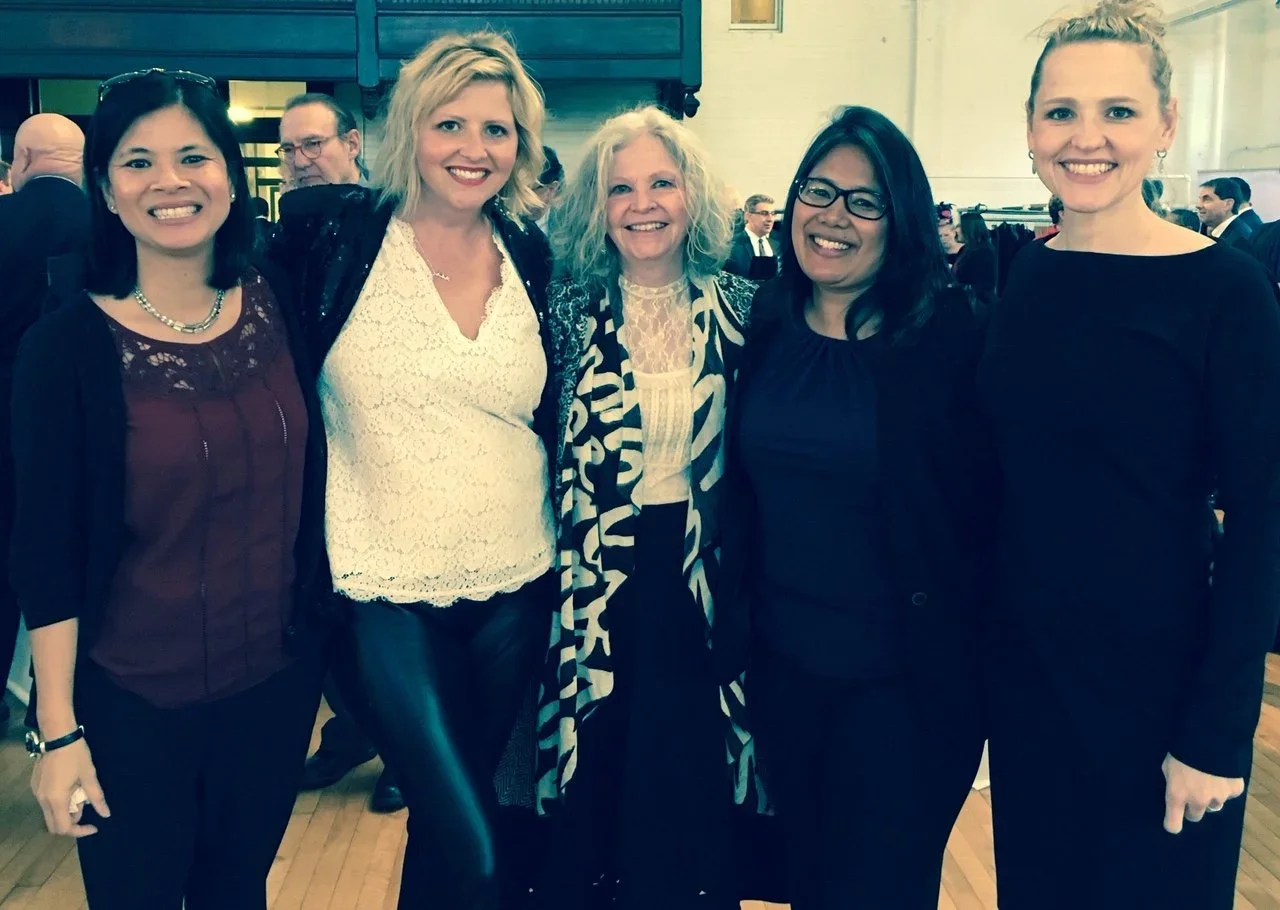
Kari - 17, Vietnamese, adopted from Vietnam
Senior in high school. Caring, kind, smart and second mother to us all. She played the role of protector and was always there to support us. Her adoption papers said she was a certain age, but our pediatrician disagreed. After an x-ray of her hand better determined her age, Kari jumped from 11 to 13 (never being 12). She was a perfect student and got along with everyone. Still friends with her grammar, high school and college friends, she is one of the kindest and most caring people.
Kari would attend my father’s alma mater, Williams College, marry her college boyfriend and, not surprisingly, become a social worker before becoming a mom to 3 great kids. (Larsen grandchildren = 10)

Anika - 15, arrived by birth
Junior in high school. The star in every Larsen Christmas Show, she performed in every theater performance in school. Strong-willed, smart and confident, she and I struggled to get along as kids. Because we looked so similar, we were constantly confused for each other, which irritated and frustrated both of us. We were so used to being called by the other’s name that one time when I went to the dentist, they called out “Anika?” in the waiting room and I shrugged my shoulders, followed the dentist back, and had sealants applied to my molars that were meant for her teeth. Stuff like this made me long desperately for people to know just who I was. Hence the name of my company. Even though we didn’t get along at home, Anika would stand up to my bullies in grammar school and look out for me in high school. By the time we were in college, she often sent me postcards, and when she turned 21 she got me a duplicate of her driver’s license. That was the first time I didn’t mind being confused for her. I still know her social security number by heart.
I would follow Anika to NYC, where she was beginning her acting career and I would start my fashion career. She would teach me the difference between the local and the express trains and we would live in the same building in Manhattan and next door to each other in Brooklyn.
Her soulful voice and acting skills would lead Anika to study theater at Yale University and be one of the few white people in the multicultural singing group Shades, which looked a lot like our family. After a 20 year career in theater, Anika was nominated for a Tony-award. But her favorite role so far is mother to her two young sons (I was a key member of her birthing team for both births) and wife to a talented trumpet player. (Larsen grandchildren - 12)
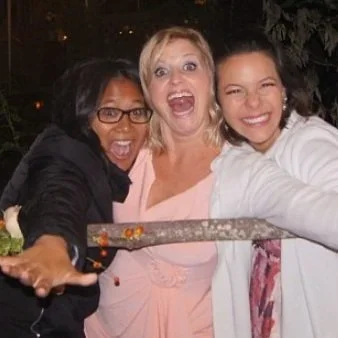
Siri - 14, Cambodian, adopted from Cambodia
Sophomore in high school. A world-class gymnast competing across the globe. As a baby in Cambodia, she was found by the side of a road with her umbilical cord still attached by two nuns. She weighed only 2.2 pounds. Her rise to becoming an elite athlete was a miracle. Her dual citizenship as Cambodian and Norwegian allowed her to compete on the Norwegian national gymnastics team. Tons of press outlets captured her story over the years, one of my favorites being Evening Magazine. It feels like a time capsule, as you can see us all as teenagers in this TV segment.
Siri would attend Michigan State University on a full athletic scholarship and later work for the US Gymnastics Federation, before landing at a PR company in NYC, where she's been for years. She is married with a son and, not surprisingly, lives around the corner from Kari in Westchester, as they were always intensely close. (Larsen grandchildren = 13)
Britta - 13, arrived by birth
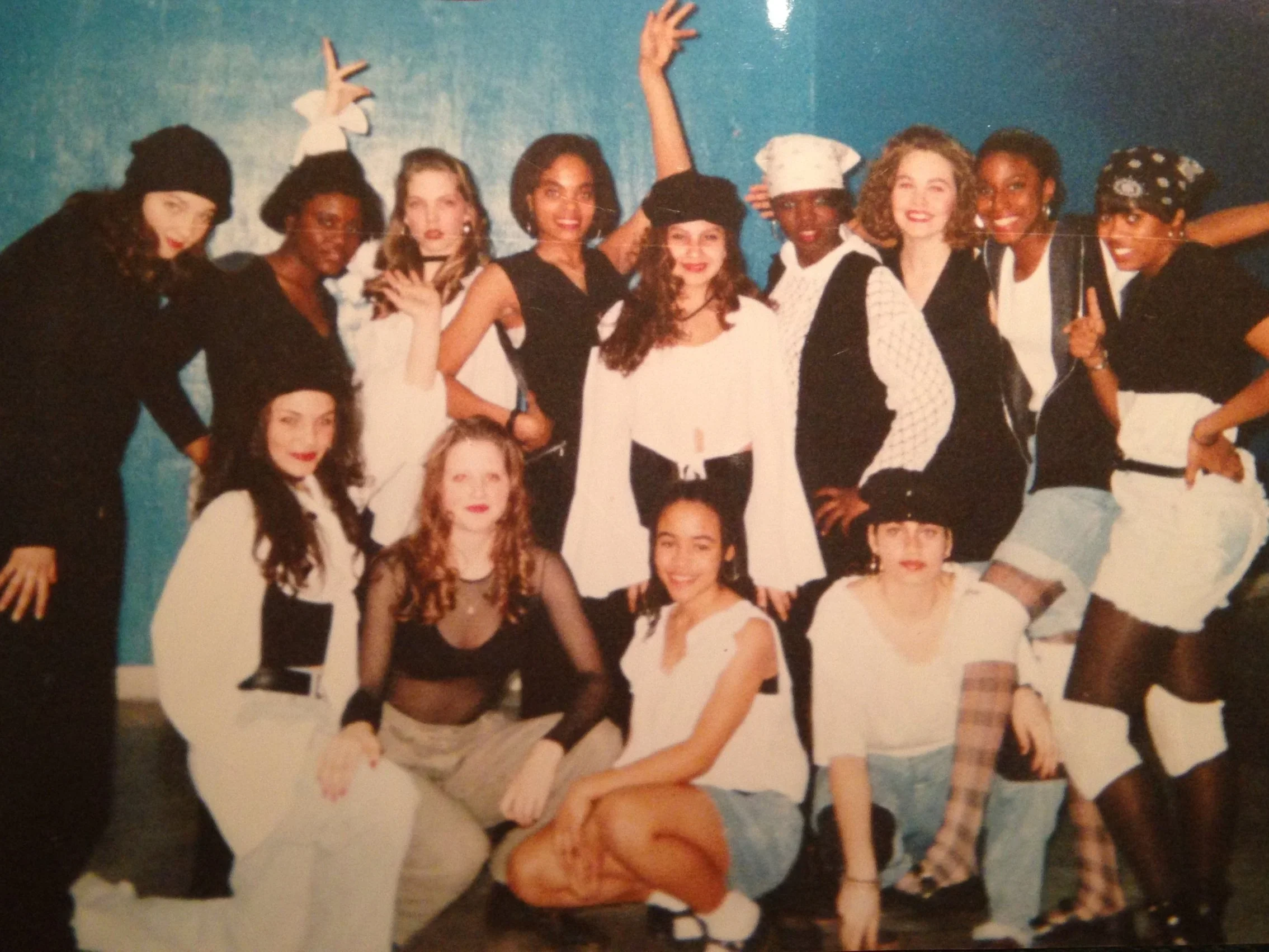
Freshman in high school. Girly. Styled all my sisters for their proms and parties. The go-to advisor for all things fashion and make-up. Always able to make friends of any age, background or interest -- I got along with every clique but wasn’t really in any. I started a hiphop dance group called the ‘Fly Girls’ that I loved leading. But school was tough, as I struggled with dyslexia and went through years of bullying in grammar school. Self-esteem issues would lead me to an abusive relationship with my first boyfriend at age 15 that lasted for five years.
I would later attend Boston University and translate my love for all things fashion and beauty into a career in the fashion industry. Highly influenced by the personalities, relationships and dynamics of my family, my people skills would prove to be my unique superpower. The executives at an agency I was a founding member of saw my people operations skills and promoted me to HR. It was a role I didn’t want, having grown up with a hyper-awareness of stereotypes and biases. An enthusiastic, blonde, white woman as HR? Not me. But eventually I couldn’t deny that it is me. I love being an advocate for employees -- all of them -- regardless of role, rank or identity.
I would meet my husband when I was 20 and became the first daughter to get married, with an epic wedding in the backyard of our childhood home. I would decide at 43 to leave him and became the first daughter to get divorced. We have two amazing children together, whom we co-parent. (Larsen grandchildren = 15)
Nissa - 9, arrived by birth
5th grade. Bright, funny and talented. With so many siblings and so many roles already taken by them, Nissa struggled to find her identity. She was good at so many things, but everything she was good at, someone had done before her. My parents have to be exhausted by this point, and Nissa had 4 older sisters and 4 older brothers simultaneously bossing her around and ignoring her completely. I like to think she and I were close growing up, although I think I also enjoyed bossing her around as I had no one else who would listen to me.
Nissa would attend my mom’s alma mater, Vassar College, and study Art History. She works in hospitality, coaches gymnastics and lives in the Hamptons.
Christian - 14, El Salvadorian, adopted from El Salvador
8th grade (I think). Not sure if he was still in school at this time. Christian was adopted in 1982 and spent more years living outside our home than in it. His biological family struggled in poverty and violence and lied about his age and health in order to have him adopted (they said he was 4 years old when he was 7 and downplayed his crippling polio). Confined to a wheelchair, not speaking a word of English, he joined the Larsen family. Within a few years, he set fires in the house, tormented his siblings, and darted out into streets in his wheelchair just to watch panicked drivers swerve. My parents would have to send him to a residential treatment center because he was so destructive.
Christian would spend years in and out of jail before being deported in 1994 back to El Salvador. My adopted siblings all had green cards, but my parents left them citizens of their native country so as to keep their identity -- in Christian’s case, this backfired. He now panhandles in the streets of San Salvador. He calls my mother every Mother’s Day, often apologizing for blowing the opportunity he was given in America. Christian has one son. (Larsen grandchildren = 16)

Trygve - 3, arrived by birth
As our high school teachers called him: The Caboose. So much younger than the rest of us, he was our favorite doll to dress up. Tryg was spoiled by everyone and had such a different upbringing than the rest of us -- he was more an only child with 11 parents than part of the pack of 10 siblings. After all the teenagers left home, the house must’ve felt empty with just Mom, Dad, Nissa and Tryg.
My parents would end up divorcing a few years later. Tryg would pretty much go through middle school and high school with a single mom, hearing stories of the Larsen legacy. He would study auto mechanics and then go to work for the Boston Marathon. He was mere feet away from the bombing at the marathon finish line in 2013. A few years ago he decided he was done with Boston winters and he moved to Hanalei, Hawaii to live in paradise with his beautiful wife. We hope they add more grandchildren to the Larsen count of 16, since the rest of us are well into our 40’s.
How did growing up in such a dynamic team environment influence who I’ve become?
In about a million ways. I talk about my upbringing often in my HR role, as it influenced the way I approach negotiation, teamwork, motivation, and many other areas of my work. But today, I’m reflecting on one part of this story… the place in the middle. Growing up, I wasn’t the most talented and I wasn’t the most troubled. The world class gymnast was featured on the evening news and the abusive sibling was sent away. Meanwhile, I was usually mistaken for the sister that I most looked like.
In my family, extreme behaviors, both positive and negative, were the ones that won time for attention. This is true for large families and it’s true for companies. Though I didn’t live at either extreme, I care about people who did. But I also care about people who thrive and suffer in the in between, and struggle to be seen, heard, supported, and rewarded. Just because your talents aren’t newsworthy doesn’t mean they don’t have an impact. And likewise, just because your actions aren’t criminal doesn’t mean they don’t hurt others. I’ve made it my mission to improve the employee journey at all stages and for all employees. And I mean ALL employees. Founders, interns, rock-stars, fuck-ups, and every single one in between.