Work & Life
The first 25 years without therapy.
The following 25 years with therapy.
The next 25 years as a therapist.
For much of my life, I didn’t have language for anxiety or ruminating throughs. I just knew how to work harder before I knew what or how to ask for what I needed. Work gave me independence, identity, opportunity, and a reliable way to distract myself.
This is the story of how those things became intertwined—and how I began to untangle them. There were promotions, pivots, and plenty of moments when looking accomplished felt easier than feeling okay.
Childhood
Belonging came with assigned seating.
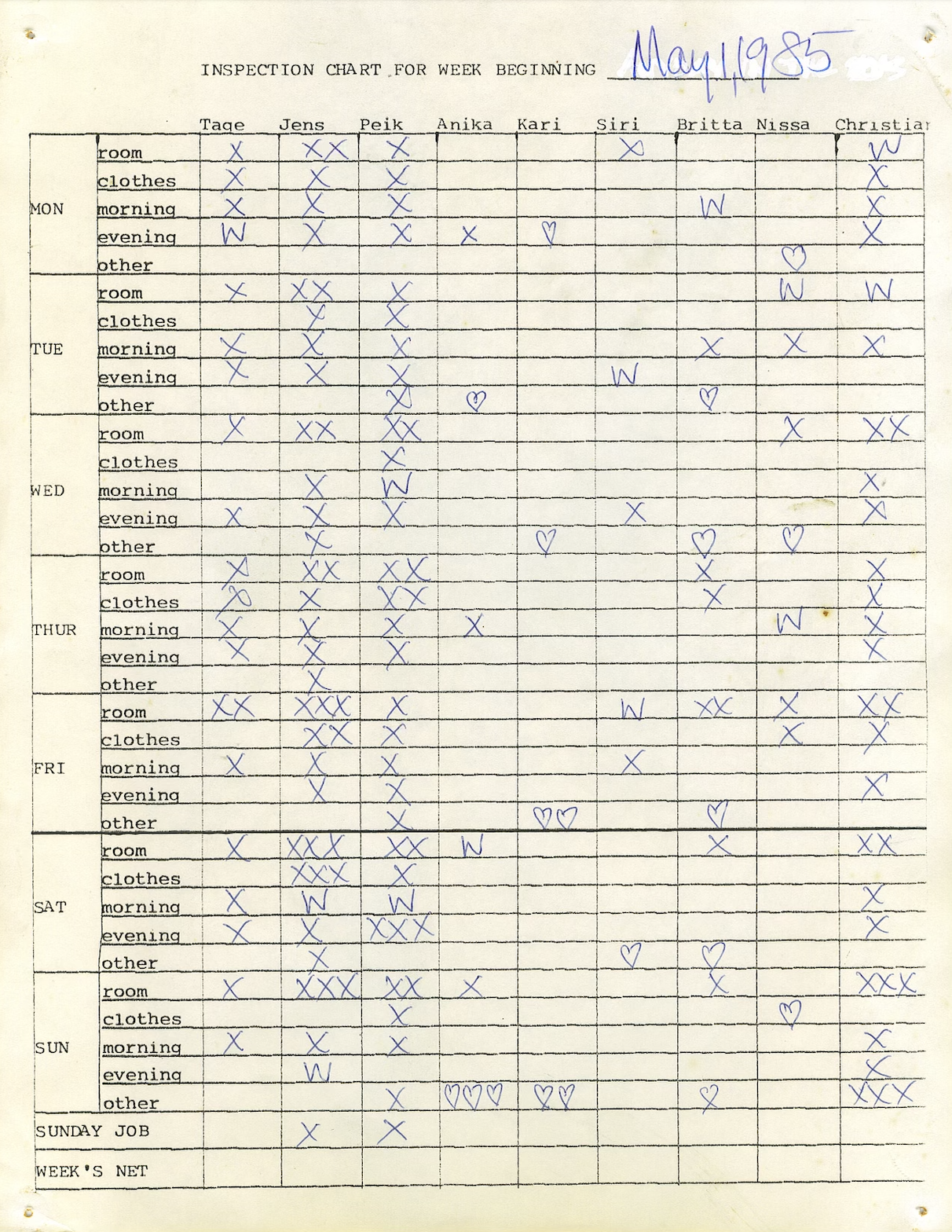
As the seventh of ten children, I grew up with more siblings than most, less personal space than many, and an early education in group dynamics. There were assigned seats in the 15-passenger van, mountains of hand-me-downs, a shared girls’ underwear drawer, and an infamous job chart.
Responsibility was part of everyday life. With that many people sharing a home, what one person did—or didn’t do—affected everyone else. Fairness was a frequent topic of conversation. Agreement about what was fair was less common.
The Job Chart
Our job chart hung in the kitchen for everyone to see. One chart tracked chores and inspections; another, The Larsen Bank, tracked our allowances. Complete your jobs and receive your allowance. Miss something and get an “X,” with money deducted accordingly. Leave your earnings in the bank and collect interest.
Adults thought it was genius. Friends and cousins made fun of us—until their parents adopted the system.
Before I knew what a performance review was, I knew what it meant to have my work inspected. Effort was visible. So were the consequences. Looking back, I’m curious about how early I began connecting doing a good job with feeling good about myself.
I also learned that contributing to a group and being recognized as an individual were different needs. I wanted both. That understanding would follow me into every workplace I entered.
Read My Family Story ⟶
Adolescents
Work was my first language of worth.
At 13, I was running a register at Brooks Pharmacy. By 15, I was an assistant manager, supervising employees in their twenties.
Work offered something clear: show up, do well, and receive recognition. Better shifts. More responsibility. Promotions. More money. In a large family where attention was divided, it was a place where my contribution could be seen.
I stayed at Brooks through high school and college, but fashion was my true interest. At 16, I added a job at Express. Over the next several years, I also waited tables, worked as a temp, and coached gymnastics—sometimes juggling as many as five jobs while balancing school.
There was always another shift to take, another task to finish, another reason not to stop.
By 20, I had accumulated thousands of hours of work and a strong belief in what working hard could give me. Independence. Competence. An identity. Somewhere to put my energy—and somewhere to direct it when other parts of life felt complicated.
Looking back, I describe work as my first addiction. I kept returning to the structure, rewards, and reassurance of being useful. It helped me move forward while keeping some deeper needs out of view.
Those were patterns I would begin to understand in therapy and, later, recognize with greater compassion in my work as a psychotherapist.
My 20’s
My career moved quickly.
I studied business and Organizational Behavior at Boston University. Given my upbringing, studying how people function within organizations felt familiar. My family had been a master’s class in hard work and inclusivity.
After graduating in 97, I moved to NYC and turned my love of fashion into a career. I began as a showroom assistant at Betsey Johnson, then became a Creative Operations Coordinator at Donna Karan.
Fashion gave me a way to express myself and distinguish myself. Work gave me structure, opportunity, praise, and a place to direct my ambition.
It also gave me an unexpected introduction to therapy. After September 11, Donna Karan’s HR department offered five free therapy sessions. I began to understand experiences and patterns that I had previously tried to manage by staying busy.
My career was moving forward. Therapy starrting answering question: why are you so worried? why are you so organized?
In 2002, I joined a growing creative agency, leading work across production, studio operations, and project management. As the agency expanded, it needed an HR function, and I received a suprise promotion from a mentor who knew better than I what my purpose was not managing projects with people but supporting people with their projects.
My multicultural upbringing, business degree, Organizational Behavior coursework, and newly acquired copy of HR for Dummies became my toolkit. The book sat on my desk for the next year—a fairly honest indication of how much I knew about formal HR. The responsibility was real, and overnight, my purpose became clear: to advocate for people, regardless of role, rank, or identity.
I loved caring about the people behind the projects: those receiving recognition, those struggling, and everyone quietly keeping things moving. My twenties took me from showroom assistant to creative operations and HR leadership. I would became a VP in 2007, in my early thirties.
I was advocating for other people while beginning to understand what caring for myself might require.
Read “Donna Karan Sent Me to Therapy” ⟶
My 30’s
The life I couldn’t start.
My 30s began with less interest in climbing the corporate ladder and more concern about whether I could get pregnant I rushed from intense workdays to fertility treatments. After four years of trying and being told I couldn’t have children, the work that had once absorbed me no longer felt like enough now that I couldn’t be a mother.
During those years, I discovered yoga, meditation, Buddhism and nature. They offered ways to reconnect with myself beyond what I could accomplish in the office. Eventually, I resigned from the agency in NYC that I’d been at for ten years to moved to Hudson Valley to volunteer at the Omega Institute in their wellness center, telling myself, “If I can’t give birth to a baby, I’ll give birth to myself.”
Soon afterward, I learned I was pregnant. After years of trying to plan this part of my life while working a full-time job, I got pregnant naturally the weekend after I left my job.
A few months after my son was born, I returned to work. I had been working since I was 13, and being useful, capable, and needed was easy at an office and difficult as a mother. I returned to work as an HR executive at a founder-led creative agency, helping build its people operations and culture while adjusting to being needed at work and at home myself.
I cared deeply about the people I supported. I was also beginning to understand how much of my own identity rested on being the person who worked.
At one point, there were even T-shirts that read “Britta Makes It Happen.” I loved them. It was true but at what cost to my mental health.
Professionally, I developed a specialty in founder-led creative companies and the employee journey, from candidate through alumni. Personally, I was struggling with inequality in my marriage and how much I wished I had more time to be a mom.
But my compensation grew alongside my responsibilities, which continued the pressure to work. I shared my Salary Story on Refinery29 because transparency can help people negotiate their compensation with better information. Learning to advocate for others didn’t always translate to valuing myself.
My 40’s
Becoming a founder. Becoming legally single. Becoming a grad student.
By my 40s, I recognized the thread running through my career: founder-led companies. I loved the creativity, ambition, and possibility—and cared about how those big ideas became everyday experiences for the people doing the work.
In 2018, I became a founder myself, launching It’s Britta Consulting. My specialty was bringing experienced HR leadership to founder-led companies with fewer than 50 employees. A small team still has complicated relationships, difficult decisions, and people who deserve thoughtful support.
From fashion houses to innovation labs and creative studios, I helped translate founders’ visions into clearer roles, thoughtful practices, and cultures that made room for the individuals within them.
For years, people left conversations with me saying, “That felt like HR therapy.” We might have started with a performance review or a difficult colleague and ended up talking about boundaries, belonging, anxiety, or whether being good at your job meant being okay.
Then came 2020. The pandemic and conversations about racial injustice deepened the emotional weight showing up at work. I wanted to understand more and become better equipped to help.
In 2023, I returned to school at Northwestern University to study Clinical Mental Health Counseling. After decades of being the person expected to have an answer, I became a student again. There was a lot to learn. There were also a lot of tabs open.
I earned my master’s in 2025. My studies emphasized multiculturalism and social justice, and my thesis explored the distinction between executive coaching and executive therapy.
That year, I brought my HR and mental health work together under It’s HR Therapy. I also became a board member at The Philipstown Behavioral Health Hub, supporting access to mental health and addiction resources in my community.
I had spent years caring about the people doing the work. I was developing new ways to care for the lives they were living, too.
My 50’s
Making room for grief, joy, travel, and having the best part of my life ahead of me.
I turned 50 in March 2026, a few weeks after my sister died of an overdose. I entered the decade carrying grief alongside the beginnings of becoming a psychotherapist that I had worked so hard towards.
Studying grief and living through it was beyond supportive. My education gave me language and perspective. It didn’t make me exempt from feeling it all, needing support, missing my sister, and having days when understanding it better clinically actually made it worse.
But meeting clients each week and supporting their life, their stuggles, their needs was healing.
Today, I’m a Mental Health Counselor with a Limited Permit (MHC-LP), practicing under clinical supervision through NIAM Wellness Practice. I work with individuals and couples, with a specialty in supporting founders and executives, while continuing my HR consulting work.
I’m also raising my children and finishing my first book, You’re Doing It: Stages of Becoming. Part memoir, part psychoeducation, it brings together personal stories, human development, and what I’ve learned about identity, relationships, coping, ambition, loss, and change.
Writing it asks me to look again at experiences I thought I already understood, recovered from or grown distant to.
I’m making room for work I care about and a life I want to be present for. For joy without pretending there isn’t grief. For learning without needing to turn everything into an achievement.
Some days, that means understanding a pattern. Other days, it means noticing it after I’ve done it again.
I’m still becoming, too.
Explore My Forthcoming Book ⟶
Explore Working Together ⟶